2014年5月26日 星期一

走到鏡子裡跟愛麗斯看見裡頭有些什麼 "The Walrus and the Carpenter"


略談 THROUGH THE LOOKING-GLASS, CHAPTER IV. Tweedledum And Tweedledee 趙元任、張華譯本


THROUGH THE LOOKING-GLASS
By Lewis Carroll
http://www.gutenberg.org/files/12/12-h/12-h.htm#link2HCH0004

走到鏡子裡,趙元任譯,北京:商務,2002 (原1968 走到鏡子裡跟愛麗斯看見裡頭有些什麼)
Through the Looking Glass 愛麗絲鏡中棋緣 (譯者:張華)   2011

趙先生的翻譯,重視白話。不過,他的語言屬老一輩的,有許多地方,與現在一般說法有差異。不過他的翻譯有些地方有化境,很可參考。

張華兄的版本,採英漢對照、詳注方式,有很多資訊很可參考。譬如說本章的長詩之介紹。

CHAPTER IV. Tweedledum And Tweedledee 

首先談章名Tweedledum And Tweedledee 的翻譯。張華著附錄四收入約34種翻譯
趙本:腿得兒敦跟腿得兒弟
張本:哈啦叮和哈啦噹
另外:半斤和八兩,.......


more...


-----https://www.youtube.com/watch?v=ujwWOwnOS_k

"The Walrus and the Carpenter" by Lewis Carroll (read by Roy Macready / music by Kevin MacLeod)


'"THE WALRUS AND THE CARPENTER" is the longest,' Tweedledum replied, giving his brother an affectionate hug.
Tweedledee began instantly:
       'The sun was shining—'
Here Alice ventured to interrupt him. 'If it's VERY long,' she said, as politely as she could, 'would you please tell me first which road—'
Tweedledee smiled gently, and began again:
     'The sun was shining on the sea,
      Shining with all his might:
     He did his very best to make
      The billows smooth and bright—
     And this was odd, because it was
      The middle of the night.

     The moon was shining sulkily,
      Because she thought the sun
     Had got no business to be there
      After the day was done—
     "It's very rude of him," she said,
      "To come and spoil the fun!"

     The sea was wet as wet could be,
      The sands were dry as dry.
     You could not see a cloud, because
      No cloud was in the sky:
     No birds were flying over head—
      There were no birds to fly.

     The Walrus and the Carpenter
      Were walking close at hand;
     They wept like anything to see
      Such quantities of sand:
     "If this were only cleared away,"
      They said, "it WOULD be grand!"

     "If seven maids with seven mops
      Swept it for half a year,
     Do you suppose," the Walrus said,
      "That they could get it clear?"
     "I doubt it," said the Carpenter,
      And shed a bitter tear.

     "O Oysters, come and walk with us!"
      The Walrus did beseech.
     "A pleasant walk, a pleasant talk,
      Along the briny beach:
     We cannot do with more than four,
      To give a hand to each."

     The eldest Oyster looked at him.
      But never a word he said:
     The eldest Oyster winked his eye,
      And shook his heavy head—
     Meaning to say he did not choose
      To leave the oyster-bed.

     But four young oysters hurried up,
      All eager for the treat:
     Their coats were brushed, their faces washed,
      Their shoes were clean and neat—
     And this was odd, because, you know,
      They hadn't any feet.

     Four other Oysters followed them,
      And yet another four;
     And thick and fast they came at last,
      And more, and more, and more—
     All hopping through the frothy waves,
      And scrambling to the shore.

     The Walrus and the Carpenter
      Walked on a mile or so,
     And then they rested on a rock
      Conveniently low:
     And all the little Oysters stood
      And waited in a row.

     "The time has come," the Walrus said,
      "To talk of many things:
     Of shoes—and ships—and sealing-wax—
      Of cabbages—and kings—
     And why the sea is boiling hot—
      And whether pigs have wings."

     "But wait a bit," the Oysters cried,
      "Before we have our chat;
     For some of us are out of breath,
      And all of us are fat!"
     "No hurry!" said the Carpenter.
      They thanked him much for that.

     "A loaf of bread," the Walrus said,
      "Is what we chiefly need:
     Pepper and vinegar besides
      Are very good indeed—
     Now if you're ready Oysters dear,
      We can begin to feed."

     "But not on us!" the Oysters cried,
      Turning a little blue,
     "After such kindness, that would be
      A dismal thing to do!"
     "The night is fine," the Walrus said
      "Do you admire the view?

     "It was so kind of you to come!
      And you are very nice!"
     The Carpenter said nothing but
      "Cut us another slice:
     I wish you were not quite so deaf—
      I've had to ask you twice!"

     "It seems a shame," the Walrus said,
      "To play them such a trick,
     After we've brought them out so far,
      And made them trot so quick!"
     The Carpenter said nothing but
      "The butter's spread too thick!"

     "I weep for you," the Walrus said.
      "I deeply sympathize."
     With sobs and tears he sorted out
      Those of the largest size.
     Holding his pocket handkerchief
      Before his streaming eyes.

     "O Oysters," said the Carpenter.
      "You've had a pleasant run!
     Shall we be trotting home again?"
      But answer came there none—
     And that was scarcely odd, because
      They'd eaten every one.'

2014年5月19日 星期一

The Journal of a Tour to the Hebrides with Samuel Johnson, LL.D. by James Boswell

和平、奮鬥、救貓-人的楊索,革命之餘,帶你去看蘇格蘭秘境。
二百多年前的山、海,想必依然明淨.....
The Journal of a Tour to the Hebrides with Samuel Johnson, LL.D. by James Boswell
http://www.gutenberg.org/ebooks/6018
 楊索 馬丁·帕爾(Martin Parr),內赫布里底群島(Inner Hebrides),蘇格蘭


就回到生活了
樹還一樣 山還一樣 雲還一樣 風還一樣 天空還一樣嗎
你還一樣 我還一樣 我們腳下的土地還一樣嗎
我擰乾衣衫 拉平皺褶
但我如何收整一團亂的室內
就回到自己了
心還一樣 腦還一樣 耳還一樣 眼還一樣 血還一樣嗎
書還一樣 貓還一樣 夜晚的夢還一樣嗎
我打開盒子 魅影飛出
但我如何認清鏡像之佛耶魔耶


2014年4月27日 星期日

Rights groups query wisdom of Hamlet tour in N. Korea

《中英對照讀新聞》 Rights groups query wisdom of Hamlet tour in N. Korea 人權組織質疑到北韓演出哈姆雷特是否明智

2014-04-20

◎ 俞智敏

Human rights groups have questioned the wisdom of Shakespeare’s Globe Theatre in London taking a production of Hamlet to North Korea, but stopped short of calling for the plan to be scrapped.
人權組織質疑倫敦莎士比亞環球劇場打算到北韓演出「哈姆雷特」之舉是否明智,但並未直接呼籲放棄這項計畫。
The Globe will perform the play in the secretive state in September 2015 as part of a global tour marking the 450th anniversary of the English playwright’s birth.
環球劇場將於2015年9月到這個神秘國度演出,作為紀念這位英國劇作家誕生450週年全球巡迴公演的一部份。
But Phil Robertson, the deputy director of Human Rights Watch’s Asia division, said exclusion would be the order of the day if the performance went ahead in Pyongyang. "It’s going to be an extremely limited, elite audience that would see a production in any case," said Robertson.
但人權觀察組織亞洲區副主任羅伯森則說,假如環球劇場真的到平壤演出,一般民眾被拒於門外才是必然結果。「不論如何,能去看戲的觀眾都是人數非常有限的菁英。」
Human rights group Amnesty International urged the theatre to "read up" on the reality of North Korea before going there. "No tragic play could come close to the misery that the 100,000 people trapped in the country’s prison camps endure -- where torture, rape, starvation and execution are everyday occurrences," Amnesty said in a statement.
人權組織「國際特赦」也呼籲環球劇場在出發前應「仔細研讀」北韓的現實情勢。「沒有任何悲劇能夠描寫出受困在北韓勞改營裡的10萬人的悲慘生活,那裡每天都在發生虐待、性侵、飢餓和處決。」該組織發表聲明指出。
"When the North Korean leadership gets around to reading the plot of Hamlet, one imagines they might well insist on something else from the canon," suggested Robertson.
羅伯森還說,「如果北韓領導人有時間去讀讀哈姆雷特的劇本,我想他們可能會堅持要換另一齣戲。」
The play revolves around family feuds and Hamlet’s eventual killing of his uncle, echoing recent events in North Korea where leader Kim Jong-Un’s regime ordered the execution of his uncle Jang Song-Thaek in December last year.
哈姆雷特的重心集中在家族仇恨,哈姆雷特最後殺死了叔父,這剛好呼應北韓最近的政局發展,最高領袖金正恩政權去年12月下令處決他的姑丈張成澤。

新聞辭典

the order of the day:片語,指在某段特定時期或情況下的典型活動或流行、風潮,如At the resort’s outdoor cafe, bathing suits and sandals are the order of the day.(在這個度假勝地的戶外咖啡廳裡,泳裝和涼鞋是最常見的服裝搭配。)
read up on:動詞片語,指仔細研讀、研究某事,如Read up on the places you plan to visit before you travel.(旅遊前應先仔細研究你想要造訪的地點。)
get round to:抽出時間來做或考慮某事,如I’ve been meaning to call her, but I just haven’t gotten around to it.(我一直想要打電話給她,但始終都抽不出時間。)

2014年4月25日 星期五

Alexander Smith: Dreamthorp: Essays Written In The Country


Alexander Smith (31 December 1829 – 5 January 1867, 8 January according to Brewer's Dictionary of Phrase and Fable) was a Scottish poet, and labelled as one of the Spasmodic School.
http://en.wikipedia.org/wiki/Alexander_Smith_(poet)


External links[edit]


https://archive.org/stream/dreamthorp00smitiala/dreamthorp00smitiala_djvu.txt
許達然"非伊甸夜" 引用過
Dreamthorp
Thorp is a Middle English word for a hamlet or small village, from Old English (Anglo-Saxon)/Old Norse þorp (also thorp).[1] There are many place names in England with the suffix "-thorp" or "-thorpe". Most are in West YorkshireEast YorkshireSouth Yorkshire,Lincolnshire and Norfolk but some are in Surrey.[citation needed]

2014年4月13日 星期日

阿里德蘇薩(Ali de Souza ) 《威尼斯商人》

貪婪、情愛、歧視與同志情….莎翁經典前衛再現

導演:阿里德蘇薩(Ali de Souza )
肢體指導:盧希恩馬克道格(Lucien MacDougall)

巴薩尼歐(Bassanio),一個家道中落的貴族,為了迎娶才貌雙全的富家女嗣波希亞(Portia),向生死之交安東尼奧(Antonio)借款。雖然商船在海上遇險,但為了義氣,威尼斯的大商人安東尼奧不得不向冷酷的猶太人夏洛克(Shylock)借錢,並承諾若以自己身上的一磅肉抵債。當安東尼奧無法如期還款,只得來到威尼斯的法庭,殊不知聰慧又愛惡作劇的波西亞卻假扮法學博士,將扣人心弦的故事劇情帶到最高潮….

《威尼斯商人》是莎士比亞著名的喜劇創作,也是莎劇中,非常複雜且具高度爭議的作品。《威尼斯商人》不僅是個浪漫的愛情故事,更有不少場景發生法庭內,將觸角探向正義、種族歧視、唯物主義等等每個時代皆須面對的議題。皇家蘇格蘭藝術學院戲劇系以現代與極簡手法,重新詮釋此一四百多年前的經典巨作,新銳演員著現代服裝、使用時下潮流之台詞和口條,搭配最簡約少量的舞台設計,嶄露文學經典的時尚面容。


演出團隊介紹

皇家蘇格蘭藝術學院(Royal Conservatoire of Scotland) 成立於1845年,位於蘇格蘭首府格拉斯哥,教授音樂、戲劇、舞蹈及跨領域演出,為蘇格蘭最著名的表演藝術學院之一。皇家蘇格蘭藝術學院戲劇系是全英國培養專業戲劇演員的搖籃,著重實務課程,常與蘇格蘭國家戲劇院(National Theatre for Scotland)、蘇格蘭芭蕾舞團(Scottish Ballet)、皇家蘇格蘭國家管弦樂團(Royal Scottish National Orchestra)、蘇格蘭歌劇團(Scottish Opera)、英國廣播公司(BBC)、莎士比亞環球劇場等共製合作,每年亦舉辦五百多場演出,吸引超過五萬人次之觀眾;其畢業生常於蘇格蘭國家戲劇院、跨國電影與電視製作中演出。

演出長度:上半場75分鐘、下半場60分鐘;中場休息10分鐘

(主辦單位保留節目異動權利)
------------------------------------
2014高雄春天藝術節的一小步,21世紀國際青年劇場人交流的一大步
– 談皇家蘇格蘭藝術學院的《威尼斯商人》
文/謝嘉哲 博士(樹德科技大學表演藝術系暨藝管學程 專任助理教授)

今年是英國著名劇作家威廉.莎士比亞450週年冥誕,皇家蘇格蘭藝術學院重新詮釋莎翁的《威尼斯商人》,運用極簡風格的舞台陳設,將戲劇衝突回歸到單純的肢體張力與台詞表現,讓演員能夠盡情發揮,展現功力。身為電影、電視、舞台三棲知名演員,阿里.德.蘇薩(Ali de Souza)演而優則導,擔任此次《威尼斯商人》的導演。因著演員的專業背景,蘇薩透過其深厚的文本涵養與精煉的舞台實力,讓表演者成為舞台上最佳的說書者,在充滿意像與爆發力的走位安排中推動劇情的發展。另外,本製作也將故事背景轉化到現代爾虞我詐的金融世界,相較於過去幾年由嗜血金融機構接連引發的全球性金融風暴、金融海嘯,觀眾更易感同身受,融入劇情當中。在語言傳遞上,莎士比亞的劇本皆充滿詩意,有別於國人所熟悉的美式英文,運用正統英式英文的咬字與發音更能清楚傳遞出當年莎翁創作的優美,這齣《威尼斯商人》絕對是今年高雄春藝節目中值得期待並推薦的作品之一。

筆者在愛丁堡攻讀博士時就常耳聞皇家蘇格蘭藝術學院(Royal Conservatoire of Scotland)的製作十分精彩,每每吸引經紀人前往挑選優秀的學生。適逢今年高雄春天藝術節新增小劇場系列,亦為了促進台英劇場學生的交流,且與高雄共同發展小劇場的演出市場與質感,該校破除萬難,接受2014高雄春藝的邀演,讓筆者深深感動。

筆者相信,2014高雄春天藝術節的一小步,絕對是21世紀南台灣的青年劇場人才參與國際交流的一大步。高雄春藝既然已將小劇場納入節目策劃範疇,期待能夠藉此開創出新的格局,在每年的春天或秋天期間都可見到具品質的國際劇場學校,進行常態性的交流演出,讓高雄成為亞洲地區不可或缺的國際青年劇場人才培育及交流,甚至是將作品世界首演的重要平台。


莎劇導演提點 樹科大生大開眼界


樹德科技大學表演藝術系今天上午請來高雄春天藝術節大受歡迎的戲劇「威尼斯商人」導演阿里德蘇薩,到學校與100多位同學舉行大師工作坊,阿里德蘇薩教導學生們莎士比亞歌劇中正統的肢體及語言表現,從劇本的導讀、情緒的演出、肢體的配合各個面向,讓學生親炙大師的風範,經過一上午的課程,學生們都大呼「實在太精彩了」!

表演藝術系主任杜思慧表示,阿里德蘇薩是英國著名電影、電視和舞台三棲演員,演而優則導,他今天以4小時課程內容,讓學生深入淺出明白英國莎士比亞的經典文學,以及戲劇所激發出的能量。

2年級的鄭宇庭說,這次最大的收穫就是瞭解不用執著於台詞字面上的意義,只要揣摩角色中的情緒,自然就會帶出能量;3年級的羅賓表示,以前太執著於用腦去思考角色的情緒,但老師卻教他們只要用心去體會,就可以精準的表達情緒,真是開了眼界。(陳宏瑞/高雄報導)

 
「威尼斯商人」導演阿里德蘇(右二)今天到樹科大表演藝術系為學生上課。陳宏瑞攝
阿里德蘇(右一)親自指導學生的肢體表演,對學生表現很滿意。陳宏瑞攝
阿里德蘇執導的莎士比亞名劇「威尼斯商人」是高雄春天藝術節的熱門節目之一。陳宏瑞攝

C. S. Lewis 《中世紀和文藝復興時期的文學研究》


C.S.路易士說,我們可以採用兩種心態去旅行或閱讀,比較受教的方式,也許是「吃當地的食物,喝當地的葡萄酒,過當地人的生活……回國之後你有所改進, 想法及感受跟以前都不一樣了。……C. S. Lewis 《中世紀和文藝復興時期的文學研究》 上海:華東師範大學出版社,1999/2010,頁4


人對著玻璃看,也許只看到自己的眼睛;但如果他願意將其看穿,他就能看到天堂。  
    A man that looks on glass,
         On it may stay his eye;
Or it he pleaseth, through it pass,
         And then the heav'n espy.


-------《萬靈藥》The Elixir BY GEORGE HERBERT 1593-1633


中世紀和文藝復興時期的文學研究
-劉易斯系列

華東師範大學出版社 出版日: 99/03/05

C. S. 路易士,生於1898年,卒於1963年,是20世紀英國一位具有多方面天才的作家。他26歲即登牛津大學教席,被當代人譽為"最偉大的牛津人"。 1954年他被劍橋大學聘為中世紀及文藝復興時期英語文學教授,這個頭銜保持到他退休。 他的一生被稱為"三個C.S.路易士",意思是他在不到65歲時去世為止,完成了三類很不相同的事業:一是傑出的牛津劍橋大學文學史家和批評家,代表作包 括《牛津英國文學史o16世紀卷》。二是深受歡迎的科學幻想作家和兒童文學作家,代表作包括"《太空》三部曲"和"《納尼亞傳奇》七部曲"。三是通俗的基 督教神學家和演說家,代表作包括《天路回歸》、《地獄來鴻》、《返璞歸真》、《四種愛》等等。他一生著書逾30部,有學術著作、小說、詩集、童話,他在全 世界擁有龐大的支持者,時至今日,他的作品每年還在繼續吸引著成千上萬新的讀者。

內容簡介
C. S. Lewis 《中 世紀和文藝復興時期的文學研究》一書中收錄了C.S.路易士十三篇引人入勝的論文,其中一半是路易士有生之年沒有出版過的。書中前三篇論文對中世紀文學做 了一個總體的介紹,其餘轉向研究諸如但丁(《神曲》)、斯賓塞(《仙后》)和彌爾頓(《科馬斯》)等重要作家的作品。路易士富有洞察力和親切感的寫作,足 以吸引每位對中世紀及文藝復興文學感興趣的研究學者。

2014年4月12日 星期六

Shakespeare's The Tempest: to be read or watched? That is the question

Shakespeare's The Tempest: to be read or watched? That is the question

Can dramatic poetry only be fully appreciated on stage, as purists argue - and where do audiobooks fit into the picture?
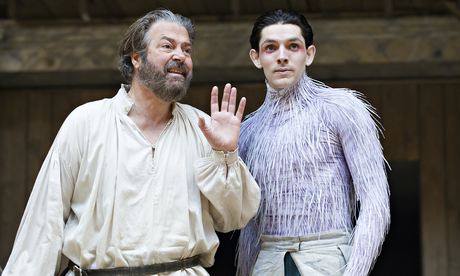
The Tempest at Shakespeare's Globe theatre
Stage presence … Roger Allam as Prospero and Colin Morgan as Ariel in The Tempest at Shakespeare's Globe theatre in 2013. Photograph: Tristram Kenton
I discovered the following in my Penguin edition of The Tempest: "He is the greatest of poets, but he is essentially a dramatic poet. Though his plays have much to offer readers, they exist fully only in the performance."
  1. The Tempest
  2. by William Shakespeare
  1. Tell us what you think: Star-rate and review this book
That's a quote from Stanley Wells, the general editor of the entire Penguin Shakespeare series, which I'm assuming appears in every Penguin Shakespeare out there at the moment, and is a pretty brave thing for a man who is supposed to be selling books to say. The implication is that you're better off spending time and money on a performance. A sentiment that has also cropped up in the comments on this month's Reading Group articles.
There is a problem here. Shakespeare's plays are for seeing in performance. Reading them, even for an experienced performer, is heavy going. To read any play with a large cast, it's hard to keep track of who is who and their relationships with each other. Harder still to remember who is in the scene and not saying much. Some people say you can improve things with a chess board and named pieces and lots of different voices. Reading a play aloud in an upstairs pub room would be even better but not what we have here.
Naturally, as the convener of the "Reading" Group I'm inclined to defend the text. Although, I don't want to do the theatre down. Actually, who am I kidding? I do want to do the theatre down. Several of the longest and most miserable hours of my life have been spent in the theatre. If it isn't the histrionics on the stage, it's the mock hysterical laughter in the audience as upper middle class men with hawing voices loudly let you know they've UNDERSTOOD THE JOKE.
Anyway. In spite of the fact that it isn't as good as television, theatre does still have plenty to offer. A good performance can bring a play to wonderful joyous life, wring out deep emotions and change and enrich your view of the text. I know all that. It can also, more simply, be fun.
The first thing I did to reacquaint myself with The Tempest this month was download the Naxos audiobook, starring Ian McKellen as Prospero. I loved it – and a good deal of the pleasure was thanks to the quality of the acting. Caliban was full of brute energy. Trinculo and Stephano's drinking scenes made me splutter with (yes, middle class) laughter – and it's no mean feat to make a 400-year-old joke fun. Ian McKellen was, as you might expect, delightful. He recorded the part shortly after filming for The Two Towers and sounds as if he is relishing the opportunity to do posh-Gandalf. Like his Middle-earth counterpart, this Prospero can growl menace, but essentially displays a benevolent heart. When he expresses affection for Ariel and tells him he'll miss him, for instance, it's genuinely moving. You can feel his love and regret. Even through headphones, while walking back from the school run, I felt a pang. Ian McKellen's Prospero is, in short, a force to be reckoned with.
Although, of course, it remains Ian McKellen's Prospero. Possibly not Shakespeare's – and certainly not mine. The big advantage that comes from actually reading a Shakespeare play is that it leaves each character open to interpretation. There's nothing wrong with McKellen's essentially nice guy – but nor is there a problem with seeing darker hues in Prospero, and thinking there's some justification when Caliban calls him "a tyrant, a sorcerer, that by his cunning hath cheated me of the island".
Likewise, I remember clearly the first time I read the play, aged 17, I took a dim view of Prospero's attempts to dictate the course of his daughter's life. Now, although I still have serious doubts about his aims and methods, I also have more sympathy for a man doing his best to protect his little girl and help her on her way into the world. I was right to see him as a bad dad. I'm also right to see him as someone trying to be a good one.
Such variable interpretations are also available line by line. Take for instance, one of the most famous exchanges in the play:
Miranda:
O wonder!
How many goodly creatures are there here!
How beauteous mankind is! O brave new world,
That has such people in't!
Prospero:
'Tis new to thee.
Is Prospero mocking his daughter, or sympathising? Is he laughing or annoyed? Does he speak the line direct to her, to chide her? Or does he mutter it to himself, in weariness? Or spit at the audience, to underline her ignorance? Does he share her joy in this new world? Or is he saying that what she sees as new is all too old to him? Admittedly, some of those possibilities are more likely than others – but all are there, and the ambiguity is part of what makes the text so delicious.
Of course, reading Shakespeare isn't all joy. Not at first, anyway. I'd be lying if I tried to pretend that I understood every word of that audiobook, and while listening undoubtedly made some passages go down easier, I also missed plenty. Plenty of lines need more than one reading – you can't get past a few without the help of an editor.
And then, there's also the fact that many just have to be savoured:
Our revels now are ended. These our actors,
As I foretold you, were all spirits, and
Are melted into air, into thin air:
And like the baseless fabric of this vision,
The cloud-capp'd tow'rs, the gorgeous palaces,
The solemn temples, the great globe itself,
Yea, all which it inherit, shall dissolve,
And, like this insubstantial pageant faded,
Leave not a rack behind. We are such stuff
As dreams are made on; and our little life
Is rounded with a sleep.
Okay, okay, I can see the advantage of hearing that in the theatre. But you get my point.