2018年12月21日 星期五

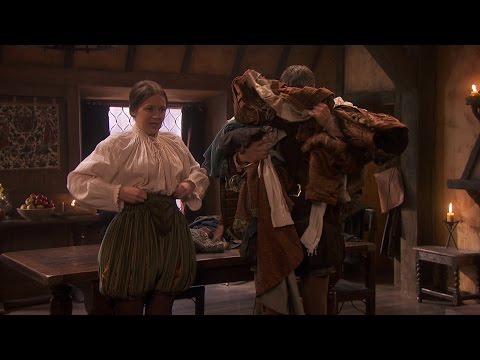
Shakespeare has trouble working from home - Upstart Crow: Episode .


1 day ago - UPSTART Crow, David Mitchell's Shakespearean comedy, will return this year for another festival special with a host of big-name guest star.

Web results

Oct 3, 2018 - The third series of Ben Elton's BBC Two comedy ​Upstart Crow has​ ... Shakespeare would of loved the tragedy in this episode, even though it ...


Upstart Crow is a British sitcom which premiered on 9 May 2016 at 10pm on BBC Two as part ... In June 2016 the BBC announced that a Christmas Special would be produced, and that a second series had been commissioned: this began ...

2018年12月16日 星期日

In Shakespeare, Food References Are a Window to the Soul


"In Shakespeare’s plays roasts, ales and pies are not props, but clues to characters’ souls, moods and motivations." (via Atlas Obscura)

2018年12月12日 星期三

Rats, from THE PIED PIPER OF HAMELIN (1842) by Robert Browning


Poet Robert Browning died in Venice, Italy on this day in 1889 (aged 77).

“Rats
They fought the dogs and killed the cats,
And bit the babies in the cradles,
And ate the cheeses out of the vats,
And licked the soup from the cook's own ladles.
Split open the kegs of salted sprats,
Made nests inside men's Sunday hats,
And even spoiled the women's chats
By drowning their speaking
With shrieking and squeaking
In fifty different sharps and flats.”
―from THE PIED PIPER OF HAMELIN (1842) by Robert Browning
Robert Browning’s famous verse retelling of the medieval legend of the Pied Piper is renowned for its humor and vivid wordplay. When the selfish townspeople of Hamelin refuse to pay the piper for spiriting away the hordes of rats that had plagued them, he exacts his revenge by luring away their greatest treasure, the children of the town. Color reproductions of Kate Greenaway’s beautiful, delicate watercolor illustrations adorn every page. READ more here: https://www.penguinrandomhouse.com/…/the-pied-piper-of-ham…/

2018年12月6日 星期四

"A Daughter Of Eve" "Twilight Calm" by Christina Georgina Rossetti


Christina Rossetti - Wikipedia

https://en.wikipedia.org/wiki/Christina_Rossetti

このページを訳す
Christina Georgina Rossetti (5 December 1830 – 29 December 1894) was an English poet who wrote a variety of romantic, devotional, and children's poems. She is famous for writing Goblin Market and "Remember." She also wrote the words of the Christmas carols "In the Bleak Midwinter," set to a tune by Gustav Holst, and "Love Came Down at Christmas." Contents. [hide]. 1 Early life and education; 2 Career; 3 Recognition; 4 Ancestry; 5 Publications. 5.1 Poetry collections; 5.2 ...
In the Bleak Midwinter · ‎Goblin Market · ‎Goblin Market and Other Poems


"A Daughter Of Eve" by Christina Georgina Rossetti
A fool I was to sleep at noon,
And wake when night is chilly
Beneath the comfortless cold moon;
A fool to pluck my rose too soon,
A fool to snap my lily.
My garden-plot I have not kept;
Faded and all-forsaken,
I weep as I have never wept:
Oh it was summer when I slept,
It's winter now I waken.
Talk what you please of future spring
And sun-warm'd sweet to-morrow:
Stripp'd bare of hope and everything,
No more to laugh, no more to sing,
I sit alone with sorrow.

*


"When I Am Dead, My Dearest" by Christina Rossetti
When I am dead, my dearest,
Sing no sad songs for me;
Plant thou no roses at my head,
Nor shady cypress tree:
Be the green grass above me
With showers and dewdrops wet;
And if thou wilt, remember,
And if thou wilt, forget.
I shall not see the shadows,
I shall not feel the rain;
I shall not hear the nightingale
Sing on, as if in pain:
And dreaming through the twilight
That doth not rise nor set,
Haply I may remember,
And haply may forget.

"Twilight Calm" by Christina Georgina Rossetti
Oh, pleasant eventide!
Clouds on the western side
Grow grey and greyer, hiding the warm sun: 
The bees and birds, their happy labours done,
Seek their close nests and bide.
Screened in the leafy wood
The stock-doves sit and brood:
The very squirrel leaps from bough to bough
But lazily; pauses; and settles now
Where once he stored his food.
One by one the flowers close,
Lily and dewy rose
Shutting their tender petals from the moon:
The grasshoppers are still; but not so soon
Are still the noisy crows.
The dormouse squats and eats
Choice little dainty bits
Beneath the spreading roots of a broad lime
Nibbling his fill he stops from time to time
And listens where he sits.
From far the lowings come
Of cattle driven home:
From farther still the wind brings fitfully
The vast continual murmur of the sea,
Now loud, now almost dumb.
The gnats whirl in the air,
The evening gnats; and there
The owl opes broad his eyes and wings to sail
For prey; the bat wakes; and the shell-less snail
Comes forth, clammy and bare.
Hark! that's the nightingale,
Telling the selfsame tale
Her song told when this ancient earth was young:
So echoes answered when her song was sung
In the first wooded vale.
We call it love and pain
The passion of her strain;
And yet we little understand or know:
Why should it not be rather joy that so
Throbs in each throbbing vein?
In separate herds the deer
Lie; here the bucks, and here
The does, and by its mother sleeps the fawn:
Through all the hours of night until the dawn
They sleep, forgetting fear.
The hare sleeps where it lies,
With wary half-closed eyes;
The cock has ceased to crow, the hen to cluck:
Only the fox is out, some heedless duck
Or chicken to surprise.
Remote, each single star
Comes out, till there they are
All shining brightly: how the dews fall damp!
While close at hand the glow-worm lights her lamp,
Or twinkles from afar.
But evening now is done
As much as if the sun
Day-giving had arisen in the East:
For night has come; and the great calm has ceased,
The quiet sands have run.
*
Poems: Rossetti contains a full selection of Rossetti's work, including her lyric poems, dramatic and narrative poems, rhymes and riddles, sonnet sequences, prayers and meditations, and an index of first lines.
2018年12月2日 星期日

John Donne's Poetry. Unknown John Donne manuscript discovered in Suffolk


John Donne's Poetry
Norton Critical Editions


PaperbackALL OPTIONS AND FORMATS STARTING AT

John Donne (Author), Donald R. Dickson (Editor, Texas A&M University)

“Donald Dickson's John Donne's Poetry is the best text of Donne now available. It is scrupulously edited, and equally useful for students and for scholars.”—Harold Bloom, Yale University
The texts reprinted in this new Norton Critical Edition have been scrupulously edited and are from the Westmoreland manuscript where possible, collated against the most important families of Donne manuscripts—the Cambridge Belam, the Dublin Trinity, and the O’Flahertie—and compared with all seven seventeenth-century printed editions of the poems as well as all major twentieth-century editions. “Criticism” is divided into four sections and represents the best criticism and interpretation of Donne’s writing: “Donne and Metaphysical Poetry” includes seven seventeenth-century views by contemporaries of Donne such as Ben Jonson, Thomas Carew, and John Dryden, among others; “Satires, Elegies, and Verse Letters” includes seven selections that offer social and literary context for and insights into Donne’s frequently overlooked early poems; “Songs and Sonnets” features six analyses of Donne’s love poetry; and “Holy Sonnets/Divine Poems” explores Donne’s struggles as a Christian through four authoritative essays. A Chronology of Donne’s life and work, a Selected Bibliography, and an Index of Titles and First Lines are also included.
More...

    PREFACE

    TEXTUAL INTRODUCTION

    TEXTUAL NOTES

    The texts of John Donne’s Poetry

    SATIRES

    1. Satire 1.
    2. Satire 2.
    3. Satire 3.
    4. Satire 4.
    5. Satire 5.

    ELEGIES

    1. Elegy 1. The Bracelet.
    2. Elegy 2. The Comparison.
    3. Elegy 3. The Perfume.
    4. Elegy 4. Jealousy.
    5. Elegy 5.
    6. Elegy 6.
    7. Elegy 7. Love’s War.
    8. Elegy 8. To His Mistress Going to Bed.
    9. Elegy 9.
    10. Elegy 10. The Anagram.
    11. Elegy 11. On His Mistress.
    12. Elegy 12. On His Picture.
    13. Elegy 14. Love’s Progress.
    14. Elegy. Sappho to Philenis
    15. Epithalamion Made at Lincoln’s Inn.

    VERSE LETTERS TO SEVERAL PERSONAGES

    1. The Storm. To Mr. Christopher Brooke.
    2. The Calm.
    3. To Sir Henry Wotton. [“Here’s no more news”]
    4. To Sir Henry Wotton. [“Sir, more than kisses”]
    5. To Mr. R[owland]. W[oodward]. [“Like one who’ in her third widowhood”]
    6. To Mr. T[homas]. W[oodward]. [“Haste thee harsh verse”]
    7. To Mr. T[homas]. W[oodward]. [“Pregnant again”]
    8. To Mr. E[verard]. G[uilpin]. [“Even as lame things”]
    9. To Mr. S. B. [“O thou which to search”]
    10. To Mr. B. B. [“Is not thy sacred hunger of science”]
    11. To Sir Henry Wotton at His Going Ambassador to Venice.
    12. To the Countess of Bedford. [“Madam, Reason is our soul’s left hand”]
    13. To the Countess of Bedford. [“Madam, You have refin’d me”]

    SONGS AND SONNETS

    1. The Message.
    2. The Bait.
    3. The Apparition.
    4. The Broken Heart.
    5. A Lecture upon the Shadow.
    6. A Valediction Forbidding Mourning.
    7. The Good Morrow.
    8. Song: [Go and catch a falling star.]
    9. Woman’s Constancy.
    10. The Sun Rising.
    11. The Indifferent.
    12. Love’s Usury.
    13. The Canonization.
    14. The Triple Fool.
    15. Lovers’ Infiniteness.
    16. Song: [Sweetest love, I do not go.]
    17. The Legacy.
    18. A Fever.
    19. Air and Angels.
    20. Break of Day.
    21. The Prohibition.
    22. The Anniversary.
    23. A Valediction of My Name in the Window.
    24. Twicknam Garden.
    25. A Valediction of the Book.
    26. Community.
    27. Love’s Growth.
    28. Love’s Exchange.
    29. Confined Love.
    30. The Dream.
    31. A Valediction of Weeping.
    32. Love’s Alchemy.
    33. The Flea.
    34. The Curse.
    35. The Ecstasy.
    36. The Undertaking.
    37. Love’s Deity.
    38. Love’s Diet.
    39. The Will.
    40. The Funeral.
    41. The Blossom.
    42. The Primrose.
    43. The Relic.
    44. The Damp.
    45. The Dissolution.
    46. A Jet Ring Sent.
    47. Negative Love.
    48. The Computation.
    49. The Expiration.
    50. The Paradox.
    51. A Nocturnal Upon St. Lucy’s Day; Being the Shortest Day.
    52. Witchcraft by a Picture.
    53. Farewell to Love.
    54. Self-Love.
    55. Image of Her Whom I Love.
    56. The First Anniversary: An Anatomy of the World

    DIVINE POEMS

    1. La Corona Sonnets
    2. Holy Sonnet 1. “As due by many titles”
    3. Holy Sonnet 2. “O my black soul”
    4. Holy Sonnet 3. “This is my play’s last scene”
    5. Holy Sonnet 4. “At the round earth’s imagin’d corners”
    6. Holy Sonnet 5. “If poisonous minerals”
    7. Holy Sonnet 6. “Death, be not proud”
    8. Holy Sonnet 7. “Spit in my face”
    9. Holy Sonnet 8. “Why are we by all creatures”
    10. Holy Sonnet 9. “What if this present”
    11. Holy Sonnet 10. “Batter my heart”
    12. Holy Sonnet 11. “Wilt thou love God”
    13. Holy Sonnet 12. “Father, part of his double interest”
    14. Holy Sonnet 13. “Thou hast made me”
    15. Holy Sonnet 14. “Oh might those sighs”
    16. Holy Sonnet 15. “I am a little world”
    17. Holy Sonnet 16. “If faithful souls”
    18. Holy Sonnet 17. “Since she whom I loved”
    19. Holy Sonnet 18. “Show me, dear Christ”
    20. Holy Sonnet 19. “Oh, to vex me”
    21. The Cross.
    22. Resurrection, imperfect.
    23. Upon the Annunciation and Passion Falling Upon One Day.
    24. Good-Friday, 1613. Riding Westward.
    25. Upon The Translation of the Psalms by Sir Philip Sidney, and the Countess of Pembroke; His Sister.
    26. To Mr. Tilman After He Had Taken Orders.
    27. A Hymn to Christ, at the Author’s Last Going into Germany.
    28. Hymn to God, My God, in My Sickness.
    29. To Christ.
    30. A Hymn to God the Father.

    Criticism

    DONNE AND METAPHYSICAL POETRY

    1. Ben Jonson [Conversations about Donne]
    2. Thomas Carew, An Elegy upon the Death of the Dean of Paul’s, Dr. John Donne
    3. Izaak Walton, From The Life of Dr. John Donne
    4. John Dryden [Donne Affects the Metaphysics]
    5. Samuel Johnson [The Metaphysical Poets]
    6. Dennis Flynn, Portrait of a Swordsman
    7. John Carey, Donne’s Apostasy
    8. SATIRES, ELEGIES, AND VERSE LETTERS

    9. Arthur F. Marotti, “Donne as an Inns-of-Court Author”
    10. M. Thomas Hester, “Ask thy father”: ReReading Donne’s Satyre III
    11. Alan Armstrong, The Apprenticeship of John Donne: Ovid and the Elegies.
    12. Achsah Guibbory, “Oh, Let Mee Not Serve So”: The Politics of Love in Donne’s Elegies
    13. Margaret Maurer, John Donne’s Verse Letters
    14. Heather Dubrow, Resident Alien: John Donne
    15. Gary A. Stringer, Some of Donne’s Revisions (And How to Recognize Them)
    16. SONGS AND SONNETS

    17. Donald L. Guss, Donne’s Petrarchism
    18. Patrick Cruttwell, The Love Poetry of John Donne: Pedantique Weedes or Fresh Invention?
    19. John A. Clair, John Donne’s “The Canonization”
    20. M. Thomas Hester, “this cannot be said”: A Preface to the Reader of Donne’s Lyrics
    21. Theresa M. DiPasquale, Receiving a Sexual Sacrament: ‘The Flea” as Profane Eucharist
    22. Camille Wells Slights, A Pattern of Love: Representations of Anne Donne
    23. HOLY SONNETS/DIVINE POEMS

    24. R. V. Young, Donne’s Holy Sonnets and the Theology of Grace
    25. Louis L. Martz, [Donne’s Holy Sonnets and “Good Friday, 1613”]
    26. David M. Sullivan, Riders to the West: “Goodfriday, 1613”
    27. Donald R. Dickson, The Complexities of Biblical Typology in the Seventeenth Century

    JOHN DONNE: A CHRONOLOGY

    SELECTED BIBLIOGRAPHY

    INDEX OF TITLES

    INDEX OF FIRST LINES


Get more Donne! (Welcome to FULCRUM: an annual of poetry and aesthetics!)