感謝有您 邁向2012
hc的”剪貼簿”在2011年約有25萬人次造訪
戴明圈: A Taiwanese Deming Circle
 "交情千千" 電子連絡簿(日報)胡適的世界 The World of Hu Shih管理學新生
 Books Birdviews 書海
 People 人物
 品質世界 quality world教育人
 英文人行道 et cetera, et cetera .漢語人行道:演變風貌
 譯藝英國風日本 心得帖
 亞洲
亞洲  SHE健康一生

AT the end of his life, Charles Dickens did not have great expectations for Christmas.
He had separated from his wife, describing his marriage as “blighted and wasted.” His mistress was not around. He was disappointed that his sons lacked his ambition. His final Christmas, he wrote a colleague, was painful and miserable.
“The Inimitable,” as he had christened himself when he was young and celebrated, was drained from traveling to give paid readings and suffering from such severe gout that he could not write clearly or walk well. He was confined to bed all Christmas Day and through dinner, bleak in his house.
Literature’s answer to Santa Claus, as Robert Douglas-Fairhurst writes in “Becoming Dickens,” had always gravitated to the holiday.
“Christmas was always a time which in our home was looked forward to with eagerness and delight,” his daughter Mamie said.
Dickens would dance and play the conjurer. “My father was always at his best, a splendid host, bright and jolly as a boy and throwing his heart and soul into everything,” recalled his son Henry.
Douglas-Fairhurst wonders if this “inventor of Christmas” might have developed his “ruthless” determination to enjoy the day because of the traumatic year he spent as a child working in a rat-infested shoe-polish warehouse in London after his father went to prison for debts. Did England’s most famous novelist need “to recreate his childhood as it should have been rather than as it was?”
The biographer notes that Dickens, in his fiction, “rarely describes a family Christmas without showing how vulnerable it is to being broken apart by a more miserable alternative. In ‘Great Expectations’ it is the soldiers who burst into Pip’s home on Christmas Day, saving him from a dinner in which the only highlight is Joe slopping extra spoonfuls of gravy onto his plate. In ‘The Mystery of Edwin Drood,’ the young hero goes missing on Christmas Eve, leaving behind several clues that he had been murdered by his uncle. Saddest of all, in ‘A Christmas Carol,’ Scrooge is forced by the Ghost of Christmas Past to observe his boyhood self left behind at school, and weeps ‘to see his poor forgotten self as he used to be.’ ”
Douglas-Fairhurst points out that Dickens’s fiction teems with ifs, just-supposes and alternative scenarios, “what might have been and what was not.” He even wrote two different endings for “Great Expectations,” one where Estella and Pip don’t end up together and one where they seem to.
“Pause you,” Pip says, “and think for a moment of the long chain of iron or gold, of thorns or flowers, that would never have bound you, but for the formation of the first link on one memorable day.”
Dickens was rescued from the warehouse and sent back to school when his father got out of prison and wangled a Navy pension. But that year drove home to him how frighteningly random fate can be.
“I might easily have been, for any care that was taken of me, a little robber or a little vagabond,” he once said.
His need to control his fate may have led to a mild case of obsessive-compulsive disorder. He routinely rearranged the furniture in hotel rooms, acknowledging that his “love of order” was “almost a disorder.”
Dickens — whose bicentenary will be celebrated on Feb. 7 — worked himself to death at 58, but he always feared obscurity was lurking.
In October 1843, he had the idea for “A Christmas Carol.” As Claire Tomalin writes in another new book, “Charles Dickens: A Life,” he told a friend “he had composed it in his head, weeping and laughing and weeping again” as he walked around London at night.
He had visited one of the “ragged schools,” set up in poor parts of London by volunteer teachers to educate homeless, starving and disabled pupils, and the novella, published that December, was his screed about the indifference of the rich toward those less fortunate.
Scrooge gets redeemed from an alternate life as a misanthrope, and Tiny Tim is saved from death. But two “wolfish” children, a boy named Ignorance and a girl named Want, are not rescued, but rather left to haunt readers’ consciences.
In his 1851 short story “What Christmas Is As We Grow Older,” Dickens makes the case that the holiday is the time to “bear witness” to our parallel lives, our “old aspirations,” “old projects” and “old loves.”
“Welcome, alike what has been, and what never was, and what we hope may be, to your shelter underneath the holly,” he wrote.
Maybe, he suggests, you end up better off without that “priceless pearl” who does not return your love. Maybe you don’t have to suppress the memory of deceased loved ones.
“Lost friend, lost child, lost parent, sister, brother, husband, wife, we will not so discard you!” he wrote. “You shall hold your cherished places in our Christmas hearts, and by our Christmas fires; and in the season of immortal hope, and on the birthday of immortal mercy, we will shut out Nothing!”
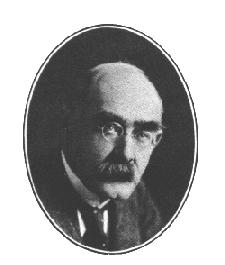

Lord, Thou hast made this world below the shadow of a dream, An', taught by time, I tak' it so---exceptin' always Steam. From coupler-flange to spindle-guide I see Thy Hand, O God--- Predestination in the stride o' yon connectin'-rod. John Calvin might ha' forged the same---enorrmous, certain, slow--- Ay, wrought it in the furnace-flame---my "Institutio." I cannot get my sleep to-night; old bones are hard to please; I'll stand the middle watch up here---alone wi' God an' these My engines, after ninety days o' rase an' rack an' strain Through all the seas of all Thy world, slam-bangin' home again. Slam-bang too much---they knock a wee---the crosshead-gibs are loose, But thirty thousand mile o' sea has gied them fair excuse.... Fine, clear an'dark---a full-draught breeze, wi' Ushant out o' sight, An' Ferguson relievin' Hay. Old girl, ye'll walk to-night! His wife's at Plymouth.... Seventy---One---Two---Three since he began--- Three turns for Mistress Ferguson... and who's to blame the man? There's none at any port for me, by drivin' fast or slow, Since Elsie Campbell went to Thee, Lord, thirty years ago. (The year the Sarah Sands was burned. Oh roads we used to tread, Fra' Maryhill to Pollokshaws--fra' Govan to Parkhead!) Not but that they're ceevil on the Board. Ye'll hear Sir Kenneth say: "Good morn, McAndrew! Back again? An' how's your bilge to-day?" Miscallin' technicalities but handin' me my chair To drink Madeira wi' three Earls---the auld Fleet Engineer That started as a boiler-whelp---when steam and he were low. I mind the time we used to serve a broken pipe wi' tow! Ten pound was all the pressure then---Eh! Eh!---a man wad drive; An' here, our workin' gauges give one hunder sixty-five! We're creepin' on wi' each new rig---less weight an' larger power; There'll be the loco-boiler next an' thirty miles an hour! Thirty an' more. What I ha' seen since ocean-steam began Leaves me na doot for the machine: but what about the man? The man that counts, wi' all his runs, one million mile o' sea: Four time the span from Earth to Moon.... How far, O Lord from thee That wast beside him night an' day? Ye mind my first typhoon? It scoughed the skipper on his way to jock wi' the saloon. Three feet were on the stokehold-floor---just slappin' to an' fro--- An' cast me on a furnace-door. I have the marks to show. Marks! I ha' marks o' more than burns---deep in my soul an' black, An' times like this, when things go smooth, my wickudness comes back. The sins o' four an' forty years, all up an' down the seas. Clack an' repeat like valves half-fed.... Forgie's our trespasses! Nights when I'd come on to deck to mark, wi' envy in my gaze, The couples kittlin' in the dark between the funnel-stays; Years when I raked the Ports wi' pride to fill my cup o' wrong--- Judge not, O Lord, my steps aside at Gay Street in Hong-Kong! Blot out the wastrel hours of mine in sin when I abode--- Jane Harrigan's an' Number Nine, The Reddick an' Grant Road! An' waur than all---my crownin' sin---rank blasphemy an' wild. I was not four and twenty then---Ye wadna judge a child? I'd seen the Tropics first that run---new fruit, new smells, new air--- How could I tell---blinf-fou wi' sun--- the Deil was lurkin' there? By day like playhouse-scenes the shore slid past our sleepy eyes; By night thos soft, lasceevious stars leered from those velvet skies, In port (we used no cargo-steam) I'd daunder down the streets--- An ijjit grinnin' in a dream---for shells an' parrakeets, An' walkin'-sticks o' carved bamboo an' blowfish stuffed an' dried--- Fillin' my bunk wi' rubbishry the Cheif put overside. Till, off Sambawa Head, Ye mind, I heard a land-breeze ca', Milk-warm wi' breath o' spice an' bloom: "McAndrew, Come awa'!" Firm, clear an' low---no haste, no hate---the ghostly whisper went, Just statin' eevidential facts beyon' all argument: "Your mither's god's a graspin' deil, the shadow o' yoursel', "Got out o' books by meenisters clean daft on Heaven an' Hell. "They mak' him in the Broomielaw, o' Glasgie cold an' dirt, "A jealous, pridefu' fetich, lad, that's only strong to hurt. "Ye'll not go back to Him again an' kiss His red-hot rod, "But come wi' Us" (Now who were They?) "an' know the Leevin' God, "That does not kipper souls for sport or break a life in jest, "But swells the ripenin' cocoanuts an' ripes the woman's breast." An' there it stopped: cut off: no more; that quiet, certain voice--- For me, six months o' twenty-four, to leave or take at choice. 'Twas on me like a thunderclap---it racked me through an' through--- Temptation past the show o' speech, unnameable an' new--- The Sin against the Holy Ghost?... An' under all, our screw. That storm blew by but left behind her anchor-shiftin' swell. thou knowest all my heart an' mind, Thou knowest, Lord, I fell--- Third on the Mary Gloster then, and first that night in Hell! Yet was Thy Hand beneath my head, about my feet Thy Care--- Fra' Deli clear to Torres Strait, the trial o' despair, But when we touched the Barrier Reef Thy answer to my prayer!... We wared na run that sea by night but lay an' held our fire, An' I was drowsin' on the hatch---sick---sick wi' doubt an' tire: "Better the sight of eyes that see than wanderin' o' desire!" Ye mind that word? Clear as gongs---again, an' once again, When rippin' down through coral-trash ran out our moorin'-chain: An', by Thy Grace, I had the light to see my duty plain. Light on the engine-room---no more---bright as our carbons burn. I've lost it since a thousand times, but never past return! Obsairve! Per annum we'll have here two thousand souls aboard--- Think not I dare to justify myself before the Lord, But---average fifteen hunder souls safe-born fra' port to port--- I am o' service to my kind. Ye wadna blame the thought? Maybe they steam from Grace to Wrath---to sin by folly led--- It isna mine to judge their path---their lives are on my head. Mine at the last---when all is done it all comes back to me, The fault that leaves six thousand ton a log upon the sea. We'll tak' one stretch---three weeks an odd by ony road ye steer--- Fra' Cape Town east to Wellington---ye need an engineer. Fail there---ye've time to weld your shaft---ay, eat it, ere ye're spoke; Or make Kergueen under sail---three jiggers burned wi' smoke! An' home again---the Rio run: it's no child's play to go Steamin' to bell for fourteen days o' snow an' floe an' blow. The beergs like kelpies oversde that girn an' turn an' shift Whaur, grindin' like the Mills o' God, goes by the big South drift. (Hail, Snow and Ice that praise the Lord. I've met them at their work, An wished we had anither route or they another kirk.) Yon's strain, hard strain, o' head an' hand, for though Thy Power brings All skill to naught, Ye'll underatand a man must think o' things. Then, at the last, we'll get to port an' hoist their baggage clear--- The passengers, wi' gloves an' canes---an' this is what I'll hear: "Well, thank ye for a pleasant voyage. The tender's comin' now." While I go testin' follower-bolts an' watch the skipper bow. They've words for every one but me---shake hands wi' half the crew, Except the dour Scots engineer, the man they never knew. An' yet I like the wark for all we've dam' few pickin's here--- No pension, an' the most we'll earn's four hunder pound a year. Better myself abroad? Maybe. I'd sooner starve than sail Wi' such as call a snifter-rod ross.... French for nightingale. Commeesion on my stores? Some do; but I cannot afford To lie like stewards wi' patty-pans. I'm older than the Board. A bonus on the coal I save? Ou ay, the Scots are close, But when I grudge the strength Ye gave I'll grudge their food to those. (There's bricks that I might recommend---an' clink the firebars cruel. No! Welsh---Wangarti at the worst---an' damn all patent fuel!) Inventions? Ye must stay in port to mak' a patent pay. My Deeferential Valve-Gear taught me how that business lay. I blame no chaps wi' clearer heads for aught they make or sell. I found that I could not invent an' look to these as well. So, wrestled wi' Apollyon---Nah!---fretted like a bairn--- But burned the workin'-plans last run, wi' all I hoped to earn. Ye know how hard an Idol dies, an' what that meant to me--- E'en tak' it for a sacrifice acceptable to Thee.... Below there! Oiler! What's your wark? Ye find it runnin' hard? Ye needn't swill the cup wi' oil---this isn't the Cunard! Ye thought? Ye are not paid to think. Go, sweat that off again! Tck! Tck! It's deeficult to sweer nor tak' The Name in vain! Men, ay an' women, call me stern. Wi' these to oversee, Ye'll note I've little time to burn on social repartee. The bairns see what their elders miss; they'll hunt me to an' fro, Till for the sake of---well, a kiss---I tak' 'em down below. That minds me of our Viscount loon---Sir Kenneth's kin---the chap Wi' Russia leather tennis-shoon an' spar-decked yachtin'-cap. I showed him round last week, o'er all---an' at the last says he: "Mister McAndrew, Don't you think steam spoils romance at sea?" Damned ijjit! I'd been doon that morn to see what ailed the throws, Manholin', on my back---the cranks three inches off my nose. Romance! Those first-class passengers they like it very well, Printed an' bound in little books; but why don't poets tell? I'm sick of all their quirks an' turns---the loves an' doves they dream--- Lord, send a man like Robbie Burns to sing the Song o' Steam! To match wi' Scotia's noblest speech yon orchestra sublime Whaurto---uplifted like the Just---the tail-rods mark the time. The crank-throws give the double-bass, the feed-pump sobs an' heaves, An' now the main eccentrics start their quarrel on the sheaves: Her time, her own appointed time, the rocking link-head bides, Till---hear that note?---the rod's return whings glimmerin' through the guides. They're all awa'! True beat, full power, the clangin' chorus goes Clear to the tunnel where they sit, my purrin' dynamos. Interdependence absolute, forseen, ordained, decreed, To work, Ye'll note, at ony tilt an' every rate o' speed. Fra' Skylight-lift to furnace-bars, backed, bolted, braced an' stayed. An' singin' like the Mornin' Stars for joy that they are made; While, out o' touch o' vanity, the sweatin' thrust-block says: "Not unto us the praise, or man---not unto us the praise!" Now, a' together, hear them lift their lesson---theirs an' mine: "Law, Orrder, Duty an' Restraint, Obedience, Discipline!" Mill, forge an' try-pit taught them that when roarin' they arose, An' whiles I wonder if a soul was gied them wi' the blows. Oh for a man to weld it then, in one trip-hammer strain, Till even first-class passengers could tell the meanin' plain! But no one cares except mysel' that serve an' understand My seven thousand horse-power here. Eh Lord! They're grand---they're grand! Uplift am I? When first in store the new-made beasties stood, Were Ye cast down that breathed the Word declarin' all things good? Not so! O' that warld-liftin' joy no after-fall could vex, Ye've left a glimmer still to cheer the Man---the Arrtifex! That holds, in spite o' knock and scale, o' friction, waste an' slip, An' by that light---now, mark my word---we'll build the Perfect Ship. I'll never last to judge her lines, or take her curve---not I. But I ha' lived an' I ha' worked. Be thanks to Thee, Most High! An' I ha' done what I ha' done---judge Thou if ill or well--- Always Thy grace preventin' me.... Losh! Yon's the "Stand-by" bell. Pilot so soon? His flare it is. The mornin'-watch is set. Well, God be thanked, as I was sayin', I'm no Pelagian yet. Now, I'll tak' on.... 'Morrn, Ferguson. Man, have ye ever thought What your good leddy costs in coal?... I'll burn 'em down to port.
| round-shouldered | (adjective) Denoting a faulty posture characterized by drooping shoulders and a slight forward bending of the back. |
| Synonyms: | hunched, stooped, crooked |
| Usage: | I remember those girls merely as faces in the schoolroom,...cut off below the shoulders...by the ink-smeared tops of the high desks that were surely put there to make us round-shouldered and hollow-chested. |
Having the shoulders and upper back rounded.
| Carl Sandburg. 1878–1967 |
| 76. Fog |
| THE fog comes | |
| on little cat feet. | |
| It sits looking | |
| over harbor and city | |
| on silent haunches | 5 |
| and then moves on. |
